An electric journey between Nairobi and Addis Ababa helps explain why testing vehicles on real routes matters, and what it takes to make those journeys repeatable.
Olivia Lamenya remembers one of her first jobs. At 16, she had to load and unload the same truck three times before she got it right. Her boss taught her about axle weights and how to distribute a load. The job became an education in how goods move and what happens when practical details are overlooked.
Early in her career, Olivia moved goods from South Africa into Namibia. Tracking a shipment could mean waiting for a driver to find a telephone booth. Border agreements depended on people making them work on the ground. Those experiences left her with a lasting question: “How do we get these two countries to talk to each other and make this movement seamless?”
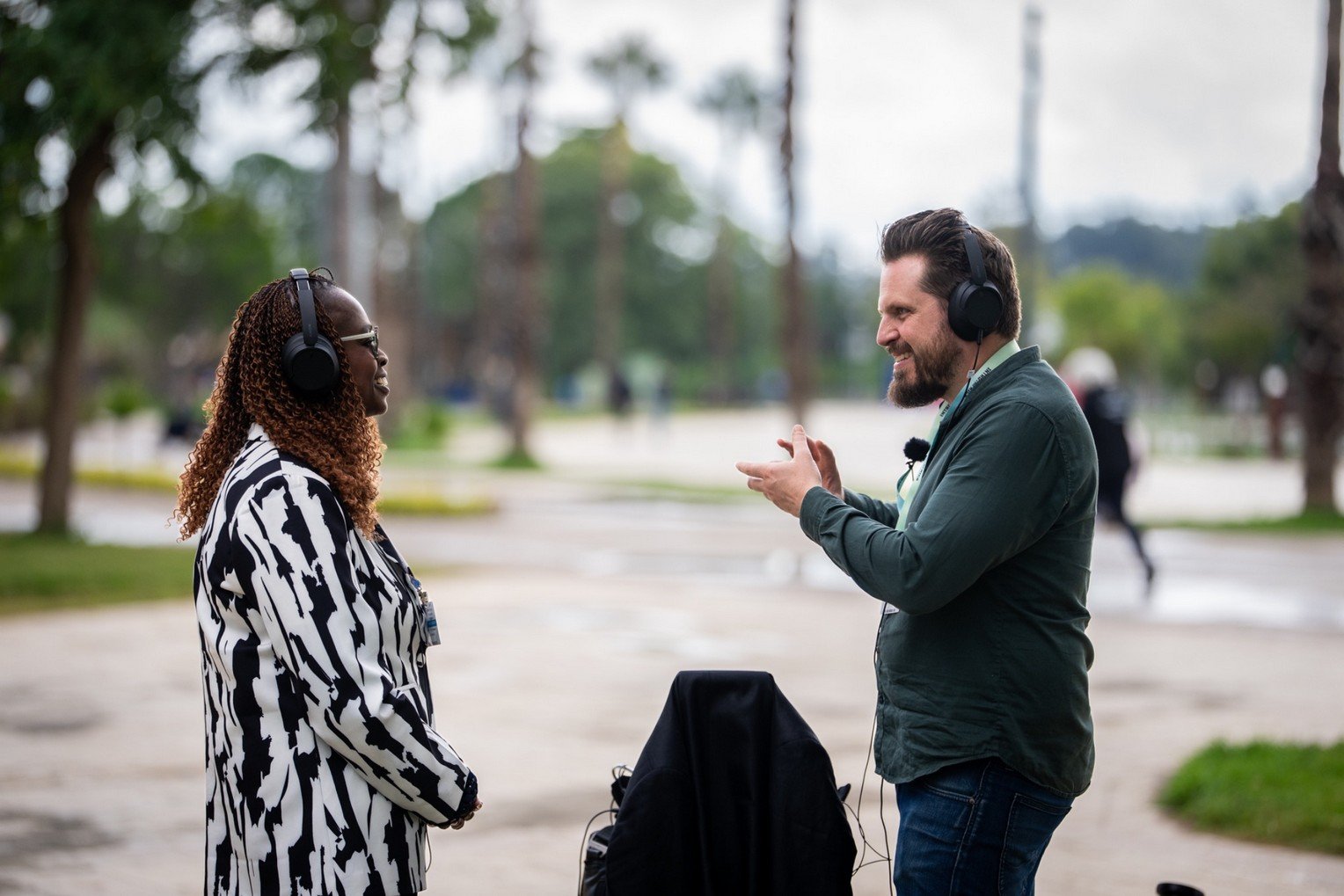
Today, as Senior Manager for Climate and Logistics Africa at the Kuehne Climate Center, she brings that operational perspective to electric freight. Speaking with Mikkel Becker-Aakervik in Antalya, she returns to the value of practical research: putting vehicles on real routes reveals both what they can do and what needs to change around them.
Eight kilometres beyond customs
The Road to Addis offered one such test. In October 2025, Intro Africa and Thought Leader Africa initiated the 1,600-kilometre electric expedition from Nairobi to Addis Ababa through our Road to Africa initiative. Kabisa and the Kuehne Climate Center took part in this groundbreaking initiative.
Olivia sees that demonstration as a challenge to expectations. Over 1,600 kilometres, she says, the expedition showed something people had thought was “a decade away”. An electric truck could travel the route and cross the border. The difficulties along the way made the next questions more concrete.
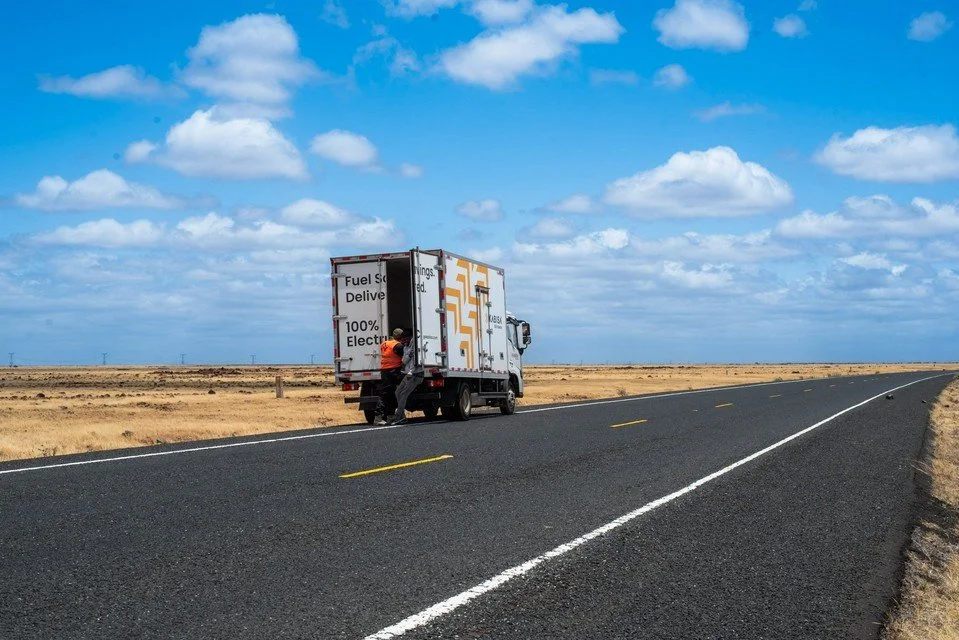
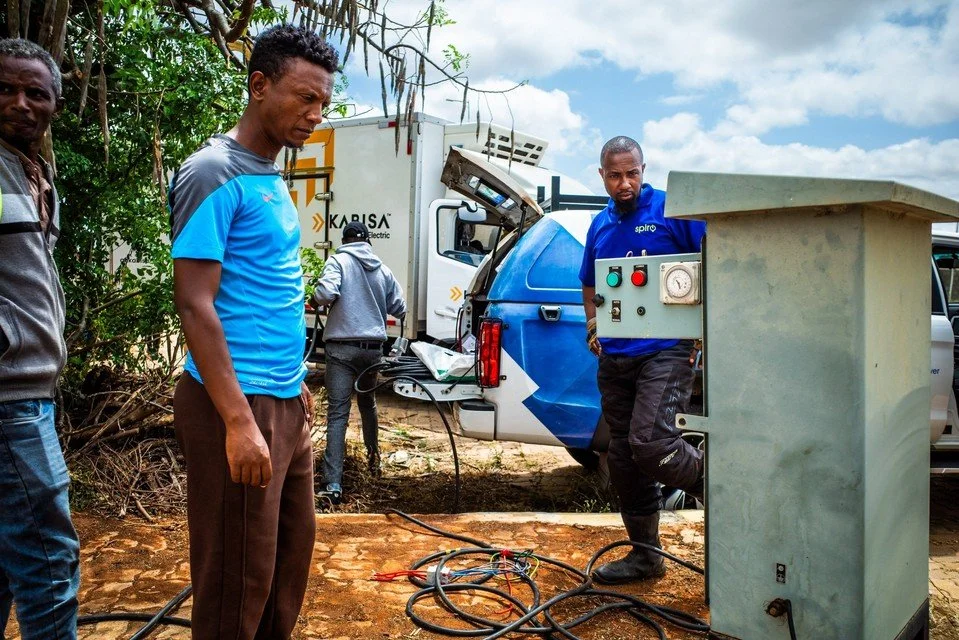
Our field notes from Moyale record how customs delays left the electric vehicles at the border overnight, unable to charge, while the Ethiopian Electric Utility had prepared a charging site eight kilometres beyond the crossing.
The journey demonstrated technical feasibility with support from partners along the route. Making that journey routine requires dependable charging access and clear cross-border arrangements, as well as operating data that businesses can use to assess costs and schedules.
Olivia has an affectionate description for the people willing to attempt these journeys. “Back in the day, I called you guys cowboys. You’re still cowboys. That hasn’t changed.” Her point is about the willingness to begin: “It takes somebody who is not scared to do something for everybody else to follow.”
Read the crew’s field notes from Moyale
Where the trucks stop
After the Road to Addis work, Olivia describes another study along the A109 between Mombasa and Nairobi. The team went out with the utility to examine the grid at different substations. For someone whose background is logistics, she says, it was an eye-opening exercise.
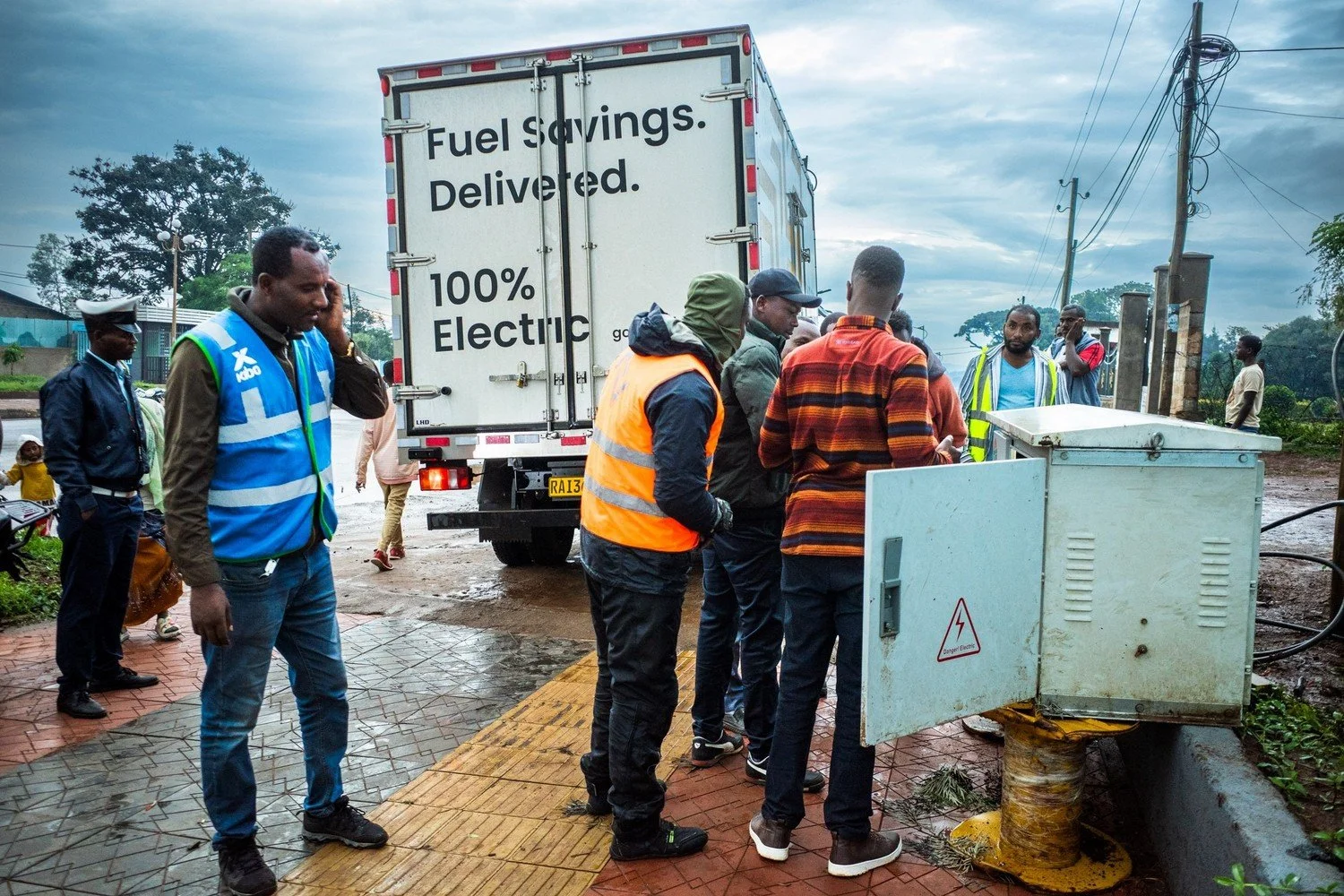
The lesson was to examine the grid locally. A substation already supplying homes and businesses may have limited headroom: spare capacity to serve additional electricity demand. Adding truck charging changes what that part of the network must support.
She illustrates the problem with a place where truck drivers naturally stop to rest. It may be a useful location for charging, yet the nearby substation may lack the capacity to accommodate that demand. Identifying the constraint gives the utility a specific place to investigate and prioritise.
“You don’t have to go and start at one end,” she says. “Start where there is a critical problem that needs to be resolved and fix it that way.”
Her argument connects infrastructure planning to the way freight already moves. Understanding where trucks pass and stop helps identify where additional capacity will be needed. It also gives governments and utilities a way to sequence improvements as electric traffic grows.
This is why she keeps returning to applied research. Trials expose problems early enough for the people responsible to respond. As she puts it, practical research helps people “learn and fail and learn and fail quicker” and understand which changes need to happen faster.
What better transport should deliver

Looking towards COP32 in Ethiopia, Olivia wants more African countries to lead the conversation on freight. She learned about the climate transition through two-wheelers; her ambition now extends to larger vehicles, including trucks and mining equipment.
For Olivia, the conversation should reach the people using transport to do their work. She wants to hear from agriculture and construction about the changes transport can make possible. That brings the discussion back to the question behind her first truck-loading lesson: how well does the system serve the people who depend on it?
A farmer, a supplier and a fleet operator will each experience the transition differently. Bringing their experience into the discussion would help connect decisions about vehicles and infrastructure to the goods that need moving and the livelihoods that rely on them.
“I would like to hear the agricultural people talking about how transport has helped them improve their agriculture.”

Thought Leader Podcast · COP31
In conversation with Olivia Lamenya
With Mikkel Becker-Aakervik in Antalya
Listen on Spotify